How to Avoid Buying Counterfeit AHCC®
 Monte R. Swarup - MD, FACOG
 Monte R. Swarup - MD, FACOG
Quick Summary
Buying AHCC online shouldn’t feel like a gamble, but counterfeit “lookalikes” are everywhere - and the label on the front is usually the least reliable part. This checklist walks you through the proof that matters: the ingredient must be clearly listed as AHCC® (not buried in a “blend”), sourced from cultured shiitake mycelia (not vague “mushroom powder”), dosed transparently so you can calculate your daily intake fast, and backed by a batch-specific Certificate of Analysis with real lab details. You’ll also learn the language red flags - miracle claims, fear marketing, sloppy packaging, and “globally sourced” non-answers - so you can filter out weak, unverified products and buy a genuine formula with real accountability.
If you are searching for how to avoid buying counterfeit AHCC, you are not overthinking it. I see patients spend money on supplements that never had a fair chance. The only difference is quality and proof.
Real AHCC® is a trademarked, controlled ingredient. Fake AHCC copies often use vague labels, weak doses, and no lab work. Here is a checklist to help you purchase a genuine AHCC® product.
Fake AHCC Checklist: Stop Buying Counterfeit Supplements
Counterfeit products thrive in the supplement industry because labels are easy to copy. Do not trust the front label. Trust the proof behind it.
Real AHCC® should read clearly, dose clearly, and show lab testing you can verify. Counterfeit products usually hide details. They lean on vague wording, tiny doses, and big claims.

Ingredient Source Clarity
A real product should say the ingredient comes from cultured shiitake mycelia. It should not say “mushroom powder”or “mushroom blend.”
AHCC® is not made from mushroom caps you cook with. It is made from a specific cultured source, produced under tight controls. If the label tries to sound broad and “mushroom-like,” it is often not AHCC® at all.

AHCC Declared Explicitly, Not Buried
The ingredient should be listed clearly as AHCC® on the Supplement Facts panel. It should not be buried inside a proprietary blend with a vague name like “immune complex.”
If you see “blend” language, you cannot verify what you are getting. That is the whole point of the blend.
Honest, Clinically Plausible Dosage
AHCC® is studied in gram-level amounts in human research. That does not mean everyone needs high doses. It means the label must let you calculate a real daily intake.
Many counterfeit products hide behind milligrams and “two capsules daily” without telling you how much AHCC® is in each capsule.
If one serving is two capsules, the label should tell you how many grams of AHCC® that equals per serving. If you cannot do the math in ten seconds, it is not transparent.
Alpha-Glucan Transparency
AHCC® is known for a specific polysaccharide profile, including alpha-glucans. Many generic mushroom supplements lean on beta-glucans. Those are not the same thing.
A counterfeit listing may talk about “beta-glucans” to sound scientific, while avoiding the details that make AHCC® unique.
You do not need a chemistry lesson on the label. The product should not swap in generic beta-glucan language or act like all mushroom extracts are equal.
Third-Party Lab Testing With Batch Info
This is the biggest filter I use in real life. If a brand cannot show a Certificate of Analysis, you are buying blind.
A real COA should be batch-specific, not a generic “tested for purity” badge. It should show identity confirmation and basic safety panels, like heavy metals and microbial testing.
If the report has no batch number, no lab name, or no dates, treat it as marketing. Not testing.
Clear Country or Manufacturer Origin

Real AHCC® has a defined origin story and controlled production. A label should not hide where the extract comes from. “Globally sourced” often means “we do not want you to ask questions.”
A trustworthy brand will tell you where the ingredient is produced and where the capsules are made.
Medical or Scientific Oversight in Guidance
A good brand sounds calm. It gives you guidance that matches clinical reality. It should talk about timing, consistency, and safety checks. It should not promise instant results or guaranteed outcomes.
If the marketing reads like a miracle pitch, it is usually covering for weak product quality.
I also look for accountability. Is there a real medical voice? Is there real safety language? Or is it just hype?
Label and Marketing Language Audit
Do a final gut-check on the language. Real health brands avoid guaranteed outcomes. They do not use fear tactics.
They do not say “100% results.” They also do not sprinkle random study references without explaining what they mean.
Also, check the basics. Misspellings, odd spacing, and sloppy label design are common signs of counterfeit products.
Fake AHCC vs Real AHCC (Comparison Table)
|
Checkpoint |
Real AHCC® |
Fake AHCC Lookalike |
|
Ingredient name |
Uses AHCC® clearly |
Uses vague naming or avoids the trademark |
|
Source |
Cultured shiitake mycelia is stated |
“Mushroom complex” or “mycelium blend” wording |
|
Dose clarity |
Per-capsule and daily grams are clear |
Only milligrams shown |
|
Lab testing |
Batch COA available, with safety panels |
No COA, or a generic seal with no batch number |
|
Claims |
Measured, claim-safe language |
Fear marketing and miracle claims |
|
Absorption logic |
Explains potency and consistency |
Ignores potency, leading to poor absorption and weak results |
|
Oversight |
Physician or clinical team is visible |
Anonymous brand, no real accountability |
|
Price |
Higher, but explained by testing and sourcing |
Too cheap for a proprietary ingredient |
Where Counterfeit AHCC Is Most Common
Counterfeit supplements show up most in high-volume online shopping channels.
That includes large marketplaces, auction-style sites, and social media shops. It also includes drop-ship stores that do not control storage or handling.
The pattern is consistent. Many sellers list the same product photo. The “brand” changes, but the bottle looks identical. That is classic counterfeit behaviour.
What to Do If You Have Already Bought Fake AHCC
First, stop using it until you verify what it is. If the bottle has no batch number or no testing, treat it as unverified. If you had any allergic reactions, talk to your primary care provider.
Next, document what you bought. Save photos of the label and the seller page. If you suspect a counterfeit, report it through the seller platform and through FDA reporting channels.
Then reset your plan. If you switch from a fake product to verified AHCC®, restart your timeline.
Finally, track results the right way. For HPV follow-up, that means your scheduled testing. For overall health, that means symptoms, sleep, and how you feel week to week.
What Real AHCC Really Is and Why Choose HPD Rx Formula

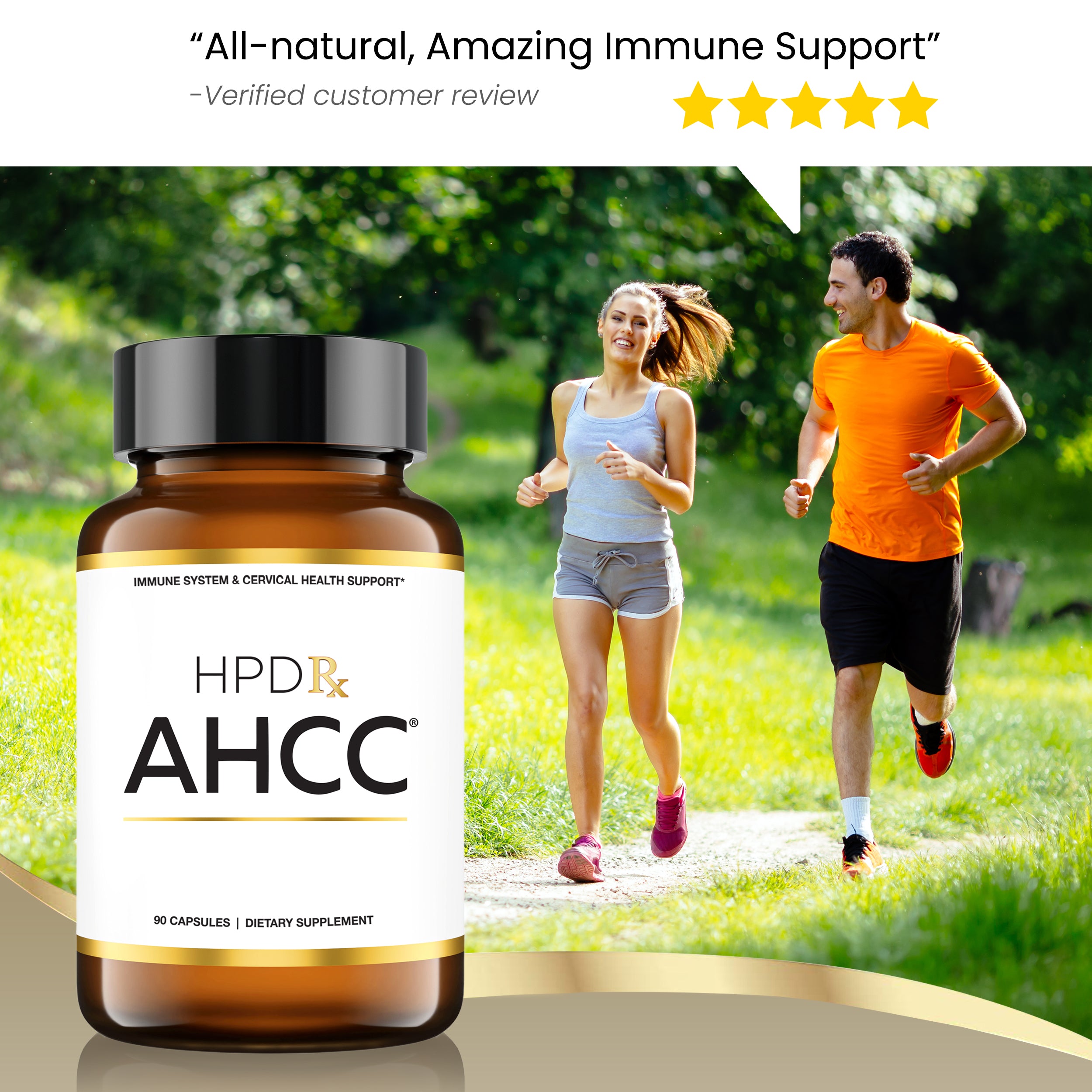
HPDRx AHCC® is not “just another mushroom supplement.” It is a trademarked ingredient with controlled production standards.
The manufacturer has warned publicly about counterfeit AHCC products, which tells you the problem is real.
At HPD Rx, I built our formula for patients who want clarity. That means:
- Doctor-formulated protocols, with plain dosing guidance
- Japanese-origin AHCC® ingredient standards
- Batch-specific lab reports, not vague promises
- Clear dosing for therapeutic use discussions
- No proprietary blends hiding the main ingredient
When patients are managing HPV stress or supporting immune health, trust matters. I want you to know what you are taking.