10 Things to Do After a Positive HPV Test
 Monte R. Swarup - MD, FACOG
 Monte R. Swarup - MD, FACOG
A positive HPV test can make your mind jump straight to cervical cancer, but that result alone tells only part of the story.
What happens next depends on the HPV type, your Pap result, previous screening, and whether the infection persists.
The useful move now is understanding those details, following the right testing timeline, and supporting your health while your immune system responds.
1. Find Out Exactly What Your HPV Result Says
Start by reading the actual report, because “HPV positive” can describe several very different screening results.
First, confirm that high-risk HPV was detected, since cervical cancer screening tests focus on HPV types linked with cervical cell changes.

Next, look for HPV 16 and HPV 18 results, plus any extended HPV typing your laboratory performed. Newer tests may separately report types such as HPV 45, 31, 51, 52, or grouped high-risk HPV types.
Finally, check whether your positive HPV result includes a Pap or cytology result, because those cervical cells help determine your next step.
2. Check Your Pap or Cytology Result
Your HPV test detects the virus, while your Pap test looks for abnormal cervical cells caused by infection. That difference matters because you can have a positive HPV test while your cervical cells still look completely normal.
-
A normal Pap with high-risk HPV often leads to surveillance rather than immediate treatment, depending on your HPV type and history.
-
An abnormal Pap changes the picture because ASC-US, LSIL, HSIL, or other abnormal cells can increase the need for colposcopy.
So, never interpret the HPV result without checking what the cervical-cell part of your screening says.
3. Ask Whether HPV 16 or HPV 18 Was Found
HPV 16 and HPV 18 deserve extra attention because they carry higher cervical precancer and cancer risks than most other types.
Current U.S. management guidance recommends colposcopy when HPV 16 or HPV 18 is detected, even if cytology shows normal cells. However, newer extended genotyping can give your clinician more detail when neither HPV 16 nor HPV 18 was found. Types including HPV 45, 33/58, 31, 52, 35/39/68, and 51 can require cytology or another triage test.
So, “high-risk HPV positive” is useful information, but knowing the exact HPV type gives you a much clearer plan.
4. Follow the Recommended Testing Timeline
There is no single follow-up schedule for every positive HPV test because cervical screening is now based on individual risk.
Your current HPV type and Pap result matter, but your earlier tests can change the recommendation considerably.
A recent negative HPV test may lower your calculated risk, while persistent HPV or previous cervical abnormalities can raise it. Previous treatment for CIN2, CIN3, or another high-grade cervical change also means closer surveillance can continue for many years.
For lower-risk HPV-positive results, repeat HPV testing around one year later is common. Higher-risk results can lead directly to colposcopy, biopsy, or additional testing rather than another routine Pap smear.
5. Understand When Colposcopy May Be Needed
Colposcopy lets your OB-GYN examine the cervix under magnification and biopsy any area that looks suspicious.
You may need one after HPV 16 or HPV 18, abnormal cytology, persistent high-risk HPV, or concerning previous screening results. The procedure does not mean cervical cancer was found. It simply gives your clinician a closer look than screening alone can provide. If a biopsy is taken, the tissue can then be checked for CIN1, CIN2, CIN3, or other cervical changes.
6. Don’t Assume a Positive HPV Test Tells You When You Got HPV
A positive test cannot tell you when HPV entered your body or which partner transmitted the infection.
HPV can remain undetectable for years and later become detectable again, especially as immune control changes over time. That means a new positive test does not automatically prove a recent HPV infection, recent exposure, or infidelity.
Partners also commonly share HPV without either person knowing, because the virus usually causes no obvious symptoms. Instead of trying to reconstruct years of sexual history, put that energy into your next screening appointment.
7. Ask Whether HPV Vaccination Still Makes Sense for You

A positive HPV test does not automatically remove the value of HPV vaccination.
The HPV vaccine cannot treat the HPV infection already present, but it may protect against vaccine-covered types you have never acquired.
U.S. recommendations support catch-up HPV vaccination through age 26 if you were not adequately vaccinated earlier. Some adults ages 27 through 45 may also choose vaccination after discussing their individual situation with a healthcare professional.
That conversation can be especially useful if future exposure to new HPV types remains possible. Your positive test does not require vaccination, but it should not automatically end the discussion either.
8. Take Smoking Seriously
If you smoke, quitting is one of the most useful changes you can make after a high-risk HPV result.
Smoking does more than affect your lungs because tobacco-related chemicals can reach cervical tissue and weaken local immune defenses.
In women with persistent high-risk HPV, heavy smoking of at least 18 cigarettes daily was linked with a 2.31-times higher CIN3+ risk.
Stopping smoking cannot promise faster HPV clearance, but it removes an established factor linked with cervical disease progression. That gives quitting a much stronger reason than most “HPV detox” advice found online.
9. Support the Basics Your Immune System Depends On
Most HPV infections become undetectable without treatment, so your immune system already does much of the work.
Give it the basics consistently: adequate sleep, balanced meals, regular physical activity, manageable stress, and no smoking. Do not expect one food, vitamin, workout, or seven-day “cleanse” to clear HPV on its own.
10. Consider Whether AHCC® Fits Into Your HPV Support Plan
AHCC® is worth knowing about because human research has specifically studied it in women with persistent high-risk HPV.
AHCC® is a standardized extract made from cultured shiitake mycelia, with immune-modulating activity involving several parts of the immune response.
The largest randomized trial enrolled women over age 30 whose high-risk HPV had remained positive for more than two years. After six months, 14 of 22 women taking AHCC® tested negative for both HPV RNA and HPV DNA. Nine of those 14 women remained negative when checked six months after stopping AHCC®.
That does not mean AHCC® guarantees you will clear HPV, and it should never replace medical monitoring. However, for women who want something more proactive than simply waiting for the next HPV test, AHCC® has unusually relevant human evidence.
Why Persistence Matters More Than One Positive Test
One positive HPV test identifies an infection; repeated positive tests tell us much more about its long-term importance. Most HPV infections become undetectable within roughly one to two years without causing serious cervical disease.
Persistent infection is different because the same high-risk HPV type remaining over time gives abnormal cells more opportunity to develop. A long-term study followed women with persistent HPV and normal cytology for up to 13 years.
Among women who remained continuously HPV-positive and attended follow-up, all 40 eventually developed CIN2 or worse during the study period. Women who cleared their persistent infection had no CIN2+ cases in that comparison group.
That does not mean every persistent infection becomes cancer, but it shows why repeat HPV testing matters so much. Your second or third result can therefore change the plan even when the first positive result only required surveillance.
Why We’re Particular About the AHCC® We Use
A positive HPV result can send you searching for something useful immediately, which unfortunately makes this an easy market for look-alike supplements.
Some products borrow phrases such as “active hexose” or sell ordinary mushroom extracts without containing genuine, standardized AHCC®.
That difference matters because you cannot assume research performed with genuine AHCC® applies to another mushroom formula carrying similar wording.
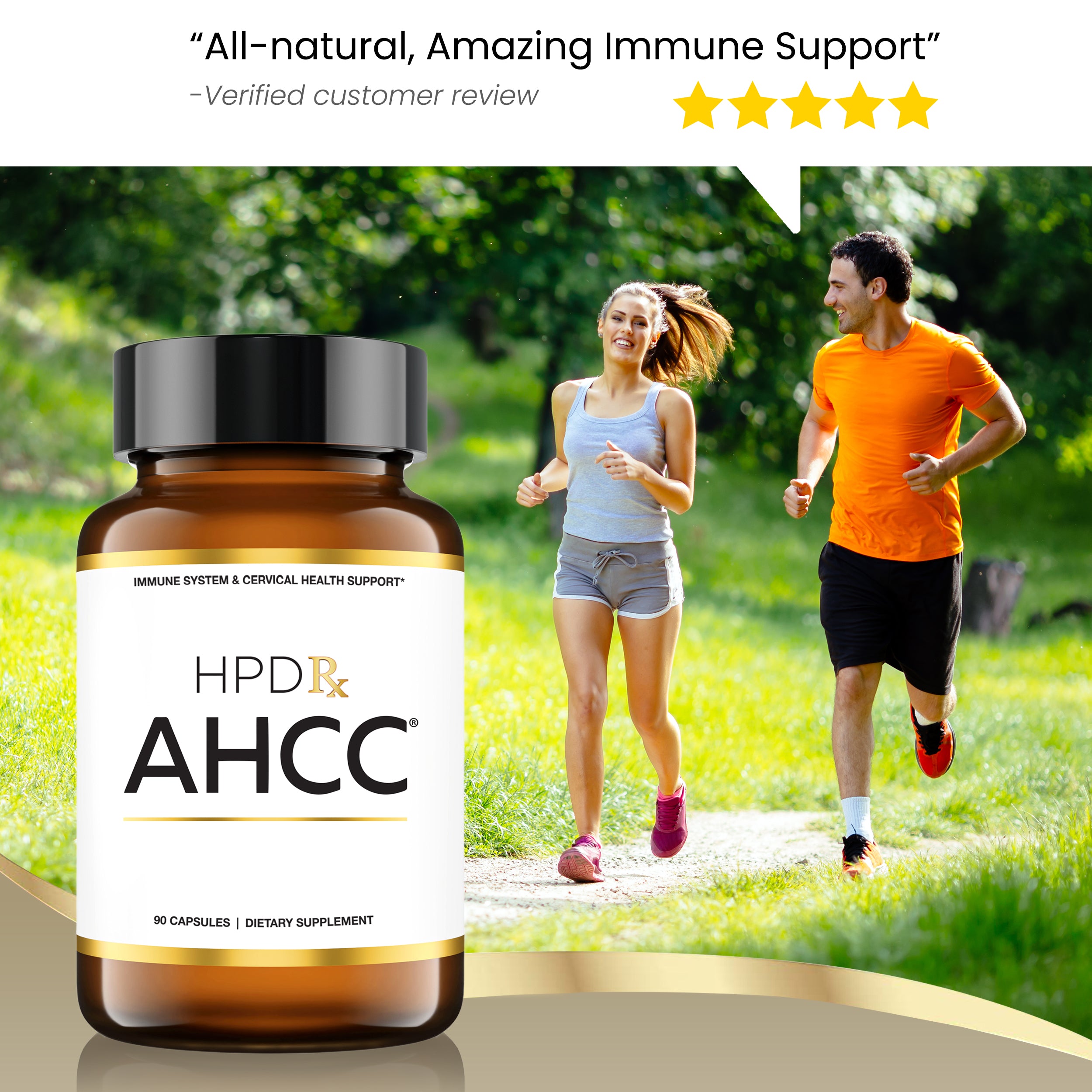
With HPD Rx AHCC®, we use authentic AHCC® rather than a generic ingredient designed to sound similar. Our formula was developed under Dr. Monte Swarup, MD, FACOG, a practicing OB-GYN with decades of women’s health experience. We also pair genuine AHCC® with organic shiitake fruiting body extract and manufacture the supplement in a U.S. GMP-compliant facility.
If you are spending months supporting your immune health between HPV tests, we think knowing exactly what you are taking matters.
What Not to Do After a Positive HPV Test
The result can trigger anxiety, but the biggest mistakes usually come from doing too much or ignoring follow-up completely.
-
Do not assume HPV means cancer: A positive HPV test identifies a high-risk virus, not cervical cancer.
-
Do not skip follow-up because you feel well: High-risk HPV and early cervical cell changes usually cause no symptoms.
-
Do not try to identify exactly when you caught HPV: The virus can become detectable years after the original exposure.
-
Do not self-treat abnormal cervical cells: CIN and other cervical changes need proper evaluation, not home treatments.
-
Do not replace screening with supplements: AHCC® and nutritional support belong beside medical monitoring, never instead of it.
-
Do not switch products every few weeks: Anxiety-driven supplement changes make consistency harder without telling you whether anything helped.
Questions to Ask Your OB-GYN After a Positive HPV Test
You can get much more from your next appointment by asking specific questions about the result in front of you.
-
Which HPV type was detected?
-
Was HPV 16 or HPV 18 found?
-
Did my test include extended HPV genotyping?
-
What did my Pap or cytology result show?
-
When should I have a repeat HPV test?
-
Do I need colposcopy or additional testing now?
-
Does my previous cervical screening history change this plan?
-
Should I still consider the HPV vaccine?
-
Can we review AHCC® and my other supplements together?
Write the answers down. A clear timeline is far more useful than leaving the appointment knowing only that you are “HPV positive.”
Final Takeaway
Knowing what to do after a positive HPV test starts with understanding the exact result, not trying to eliminate HPV overnight.
Check the HPV type, review your Pap, follow the testing timeline, and take persistent infection seriously without assuming cancer.
Then focus on general immune health, and consider AHCC® as an optional added layer while recommended medical follow-up continues.