AHCC® Ingredients
Quick Summary
AHCC® is a trademarked, standardized extract made from cultured shiitake mushroom mycelia (not the mushroom “cap”), and that detail matters because many products online try to mimic the name without matching the real ingredient. Real AHCC® is produced through a controlled culturing and proprietary enzyme-fermentation process that creates low molecular weight alpha-1,4 glucans—a different compound profile than typical mushroom powders that focus on beta-glucans. In HPD Rx AHCC®, the formula is fully transparent: 550 mg of trademarked AHCC® (shiitake mycelia extract) plus 550 mg of organic shiitake fruiting body extract per serving (3 capsules), with no “immune blend” hiding the dose. If you’re shopping for AHCC®, the safest approach is simple: look for the AHCC® trademark on the label, a clear mycelia source, an exact dose, and verifiable quality/testing—because vague “active hexose” wording and proprietary blends are common signs of look-alikes.
AHCC® is a trademarked, standardized extract made from cultured shiitake mushroom mycelia, mostly known for its immune support.
That is why the AHCC ingredients matter so much. Many brands cannot legally sell real AHCC®, so they try to imitate it with look-alike “active hexose” wording, proprietary blends, or generic mushroom powders that do not match the real ingredient profile.
Continue reading to find out what real AHCC® is made of, how to read the label, and how to spot fake products.
What Are the Ingredients in HPDRx AHCC®?
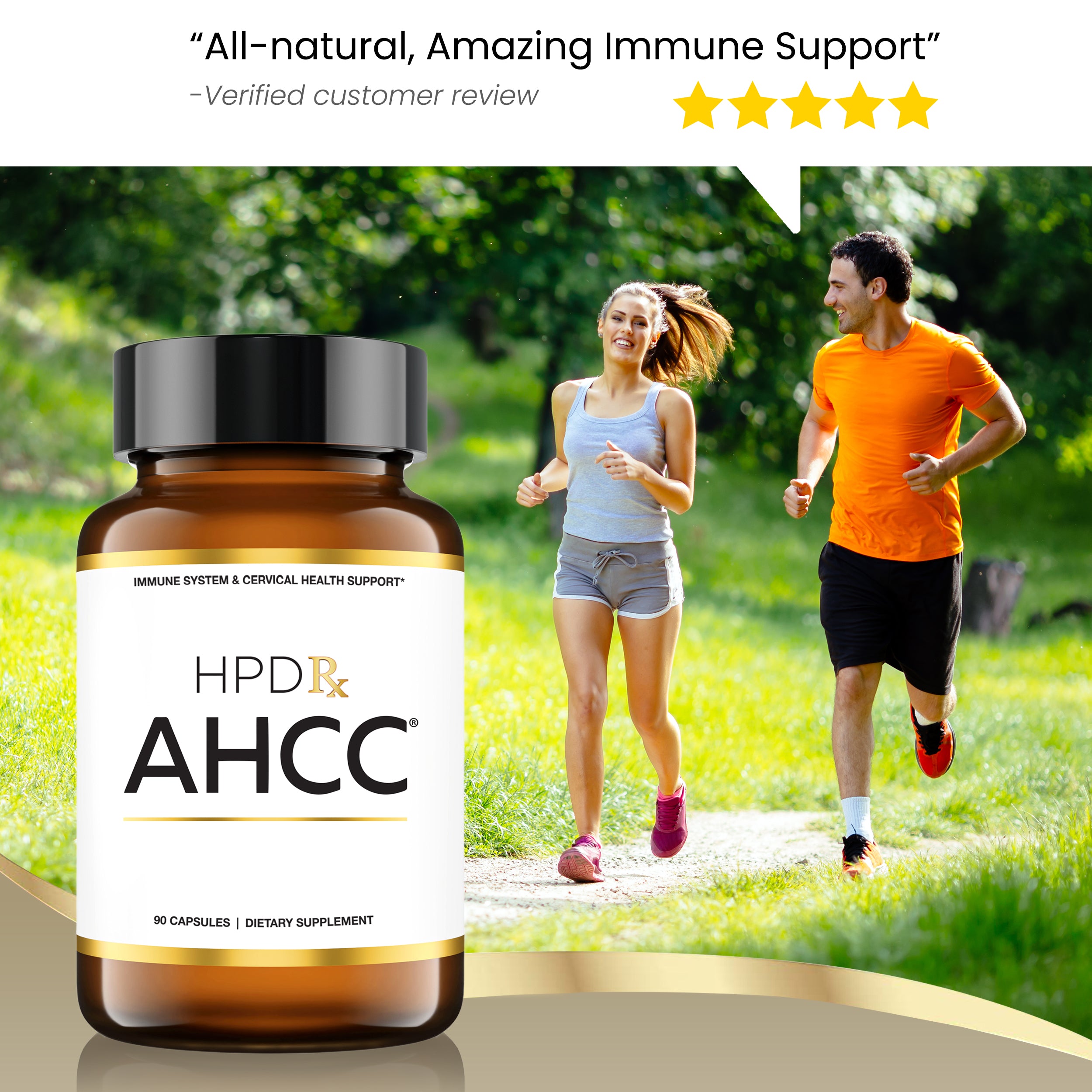
Our HPD Rx AHCC® uses a simple, trackable formula with clear amounts.
One serving is 3 capsules, and the label shows the full amounts. You get:
-
550 mg of trademarked AHCC® made from shiitake mushroom mycelia extract.
-
550 mg of organic shiitake mushroom fruiting body extract.
There is no “immune blend” that hides the real dose. You can count capsules, calculate your daily intake, and know what you took.
What Is AHCC® Made From? (Source + Manufacturing Basics)
AHCC® is a proprietary compound produced from cultured Lentinula edodes mycelia (shiitake). This is the root-like network of the fungus, not the cap you cook with.
We start with a selected shiitake strain, then grow it in a controlled liquid culture so the raw material stays consistent.
After that, a proprietary enzyme-fermentation process breaks the material into smaller, low molecular weight fractions that the body can use more easily.
This manufacturing step is the key difference between AHCC® and many “shiitake extracts” on the market. It is also why real AHCC® can be standardised from batch to batch, instead of changing every time.
The Active Compounds in AHCC® (What You’re Actually Taking)

The active ingredients are low molecular weight alpha-glucans. These are often described as partly acylated alpha-1,4 glucans, which differ from common mushroom beta-glucans.
Think of them as special “immune messaging” carbs made from cultured shiitake mycelia during a controlled process. Because they are smaller than the fibres found in many mushroom powders, they are often easier for the body to take in.
This is also why AHCC® feels different from most mushroom supplements that mainly talk about beta-glucans.
You will also see immune system targets mentioned in clinical research, like:
-
Natural killer (NK) cells: A type of white blood cell in the innate immune system that can identify and respond to infected or abnormal cells.
-
T cells: A group of white blood cells in the adaptive immune system that help coordinate immune responses and support targeted defence against pathogens.
-
Dendritic cells: Antigen-presenting immune cells that help detect foreign material and activate T cells to guide a more specific immune response.
In human clinical trials, AHCC® is also discussed as a standardized extract, meaning consistent and standardized quality from batch to batch.
AHCC® Supplement Label Breakdown (What Else Is in the Capsule?)
When you read a supplement label, look for two things: the named ingredient and the listed dose.
A good label tells you the exact extract, the source, and the milligrams per serving. A weak label hides behind vague terms like “mushroom blend” or “immune complex,” which makes honest comparison impossible.
You may also see extra ingredients on some brands, like rice bran extract, dextrin, or plant capsules. Those can be normal “support” ingredients, but they should never distract from the main dose.
Mycelium vs Fruiting Body: What AHCC® Is Actually Made From

Mycelium is the root-like network a mushroom grows from. The fruiting body is the cap you can see and eat.
AHCC® is made from cultured shiitake mycelia, not the cap. That matters because mycelia can be grown in controlled tanks, then processed the same way every time. This also helps keep the ingredient more consistent and standardized from batch to batch.
Many “mushroom supplements” use fruiting body powder or mixed blends. Those can be fine for general use, but they are not the same ingredient as AHCC®. Fruiting body products also vary more by species, growing conditions, and extraction method.
Alpha-1,4 Glucans vs Beta-Glucans: The Key Ingredient Difference
AHCC® is known for partly acylated alpha-1,4 glucans. These are special starch-like chains that come from the proprietary culturing and processing method.
They are also talked about as low molecular weight, which means they are smaller and easier for the body to handle.
Beta-glucans are different. They are the famous compounds in many mushroom powders and extracts, including turkey tail. Beta-glucans tend to be larger and more fibre-like, so they often work through the gut first.
If a product mainly talks about beta-glucans, it is usually a general mushroom supplement. If a product clearly lists AHCC® and points to alpha-1,4 glucans, you are looking at the trademarked ingredient.
Proprietary Culturing Process + Standardization: Why AHCC® Is Not a Generic “Shiitake Extract”
AHCC® is not just shiitake powder in a capsule. It starts with cultured shiitake mushroom mycelia, then it goes through a proprietary manufacturing process.
That extra step is the point. It helps keep the ingredient consistent, instead of letting it vary from batch to batch.
This is what researchers mean by standardized, a consistent and standardized quality every time you open a new bottle. Many mushroom dietary supplements do not have that.
They can change based on how the mushroom was grown, when it was harvested, and how it was extracted.
The process also changes what ends up inside the capsule. A basic shiitake extract may be heavier in general mushroom compounds.
AHCC® is processed to produce the specific profile it is known for, alpha-glucans and low molecular weight fractions.
How to Spot Real AHCC® vs Look-Alikes

A lot of “AHCC” products online are not real AHCC®.
AHCC® is trademarked, and brands must be approved to sell the real ingredient. If a company cannot use the trademark, they often change the wording to sound similar.
What is inside is almost always generic mushroom powder, a mixed mycelium blend, or a beta-glucan product that is just not the same.
Here is a quick comparison. We also have a full guide on how to spot fake AHCC.
|
Real AHCC® |
Fake AHCC |
|
Uses the AHCC® trademark clearly on the label |
Avoids the trademark and uses vague “AHCC-style” wording |
|
Lists cultured shiitake mycelia as the source |
Uses “mushroom blend,” “mycelium complex,” or “mushroom powder” wording |
|
Shows a clear, exact dose per serving |
Hides amounts in a “proprietary blend” or lists tiny amounts |
|
Often explains alpha-glucans as the key compound focus |
Talks only about beta-glucans or general “immune polysaccharides” |
|
Can provide batch-specific testing, like a COA |
Claims “tested” but gives no batch report or details |
|
Has traceable manufacturing and quality standards |
Has unclear sourcing, unclear factory details, and little verification |
|
Makes careful, realistic claims and safety notes |
Uses bold promises or “miracle” language to sell fast |
If you want AHCC® in your routine, the safest move is choosing a product you can verify.
Our HPD Rx AHCC® stands out because the dose is clear, the ingredient is stated as AHCC® from shiitake mycelia, and the brand is physician-backed with quality standards you can check.