What to Know About Oral HPV: Can HPV Spread Through Kissing?
 Monte R. Swarup - MD, FACOG
 Monte R. Swarup - MD, FACOG
Finding out someone has HPV after you kissed them can raise a very specific worry. Maybe you kissed someone with HPV. Maybe your partner had an abnormal result. Maybe you saw “oral HPV” online, and now your brain will not relax.
Can HPV Spread Through Kissing?
Yes, HPV may spread through deep kissing, but casual closed-mouth kissing is unlikely to be a main concern.
The risk, when it exists, is tied to close mouth contact. That means tongue contact, shared saliva, moist tissue, and small cuts or irritated spots in the mouth where the virus could pass more easily.
Even then, kissing is not the main route doctors focus on for oral HPV. Oral sex is much more clearly linked to oral HPV infections because it brings the mouth into direct contact with genital skin and mucosal tissue, where HPV is more commonly found.
The tricky part is that the kissing risk is hard to measure by itself. People who report deep kissing usually also have oral sex, vaginal or anal sex, or more sexual partners. So, when oral HPV shows up, it is often hard to say that kissing alone caused it.
What Type of Kissing Are We Talking About?

Not every kiss belongs in the same risk bucket. That part matters.
-
Kissing on the cheek: This is not a real HPV concern in normal daily life.
-
Brief kissing on the lips: A quick closed-mouth kiss is also considered very low risk.
-
Deep or open-mouth kissing: This is where the question becomes more serious, especially with tongue contact and fluid exchange.
The real concern is not normal affection. It is the closer, wetter contact between the mouth and another person’s mouth.
How Oral HPV Is More Commonly Spread
Oral HPV is most often linked to oral sex. That means the mouth comes into direct contact with genital or anal skin, where HPV can live even when there are no visible warts, sores, or symptoms.
HPV spread happens through close skin to skin contact, especially around moist tissue. This is why oral sex, vaginal or anal sex, and intimate genital contact matter more than everyday contact like hugging, sharing space, or a quick kiss.
HPV is also a common sexually transmitted infection, so exposure is not that rare. There are many types of HPV, and they do different things.
Low-risk types can cause genital warts. High-risk types are the ones doctors watch more closely because persistent infection can raise the risk of cervical cancer, vaginal cancer, throat cancer, or other HPV related cancers.
Most oral HPV infections do not lead to cancer. In many cases, the immune system clears the HPV virus over time. The part doctors take more seriously is dormant HPV that stays active over time. This is even worse if you smoke, have more oral sex partners, or have symptoms that do not clear, like a throat lump, mouth sore, hoarseness, or trouble swallowing.
What Research on Deep Kissing Actually Suggests
Deep kissing has been linked with oral HPV, but the link is not clean enough to blame one kiss.

In one oral HPV study, researchers tested 332 clinic patients and 210 college-aged men. Oral HPV showed up in 4.8% of the clinic group and 2.9% of the younger men. In the younger men, risk rose with more oral sex partners and more open-mouth kissing partners.
So, deep kissing may add risk when there is tongue contact and saliva exchange, especially with more partners. But oral sex is still the clearer route because it brings the mouth into direct contact with genital skin, where HPV is more common.
Another study of 164 people with HPV-positive throat cancer and 93 long-term partners found oral HPV in only 1.1% of partners. That suggests kissing or long-term close contact does not automatically mean oral HPV will spread.
The bigger picture still matters more than one kiss.
If Someone Has Oral HPV, Would They Know?
Usually, no. Oral HPV often causes no symptoms, which means many people never know they have it. The immune system often clears the virus before it causes problems.
Less often, HPV can cause warts or sores on the lips, inside the mouth, or in the throat. Oral HPV-related warts may take months to appear after exposure.
There is also no routine medical screening test for early oral HPV like there is for cervical HPV. That is why symptoms that last matter.
How to Lower Your Risk

You do not need to panic or stop normal affection. But you can lower risk in smart, real-life ways.
-
Ask about the HPV vaccine: The HPV vaccine helps protect against several high-risk types linked with cancer.
-
Know the bigger route: Oral sex is a clearer risk for oral HPV than casual kissing.
-
Use barriers when useful: Condoms and dental dams may lower exposure during oral sex.
-
Do not smoke: Smoking raises oral health risk and comes up often in HPV-related cancer risk.
-
Keep up with screening: Pap tests and HPV tests still matter for cervical health.
-
Watch symptoms: See a healthcare provider for mouth sores, throat pain, or lumps lasting over two weeks.
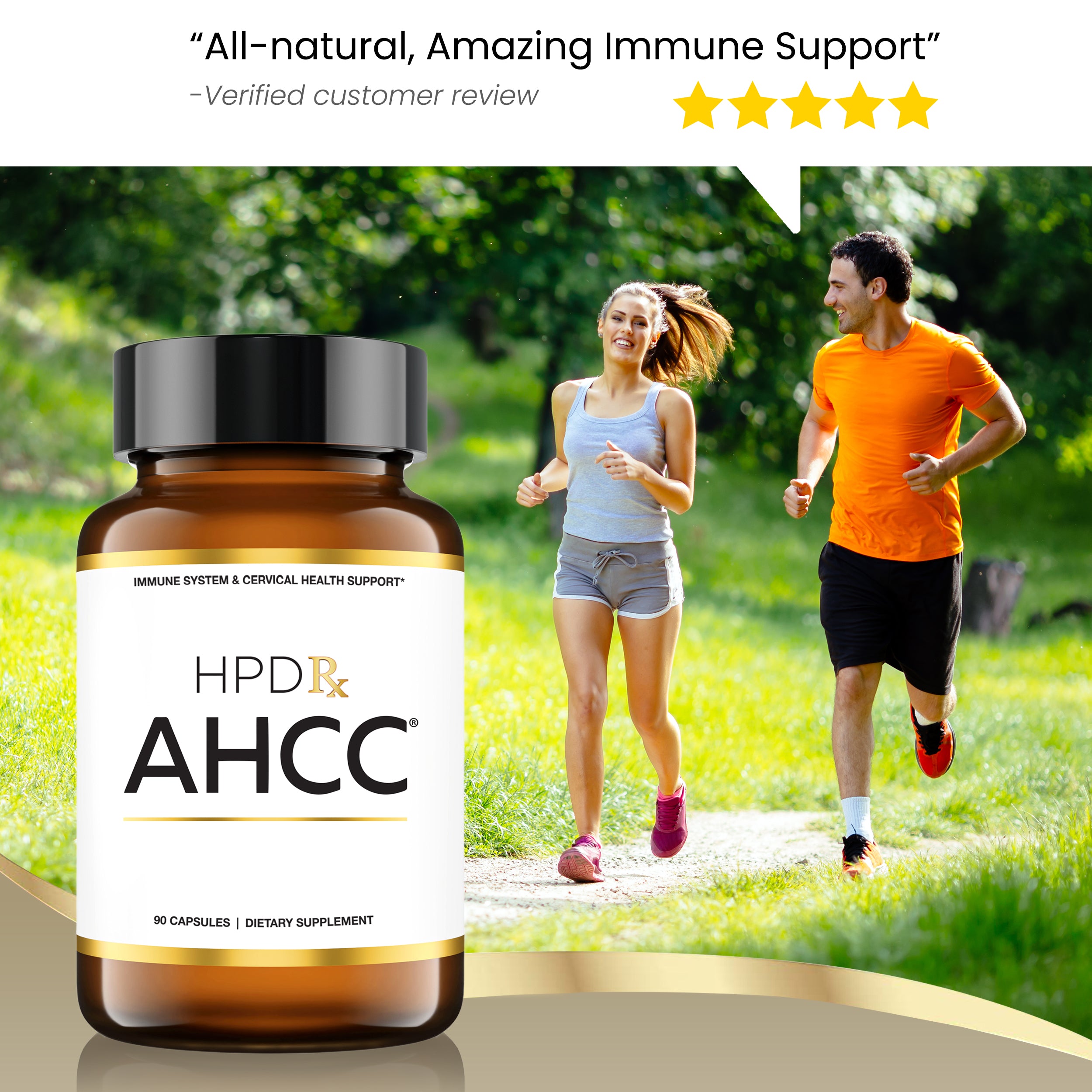
If you want better immune support while you stay on top of HPV follow-up, at HPD Rx, we offer physician-formulated supplements for HPV like AHCC® and PAPCLEAR. Both are designed to support normal immune response and cervical wellness as part of a broader health routine.
What to Do If You’re Worried About HPV From Kissing
Do not panic over one casual kiss. That kind of contact is very different from deep kissing, oral sex, vaginal sex, or anal sex.
Was there deep mouth contact? Any oral sex? Any mouth sores, bleeding gums, or symptoms that are not healing?
Talk with a medical provider if you notice a mouth sore, throat pain, hoarseness, trouble swallowing, a neck lump, or any spot that lasts longer than two weeks.
If you have a cervix, stay current with Pap tests, HPV testing, and follow-up, because that is still the best way to catch cervical changes early.
When a More Informed, Physician-Backed Conversation Helps
A kissing scare usually passes once you understand the risk. But if HPV is already part of your health picture, the bigger issue is what your body is doing with it over time.
So, the next step is giving your immune system steady support. HPV is something the immune system often keeps under control, so your routine should support that process instead of chasing every small exposure worry.
That is the kind of support we focus on at HPD Rx. We offer physician-formulated supplements for women who want to support immune health, cervical wellness, and overall reproductive health with a more thoughtful daily routine.
HPD Rx was founded by Dr. Monte Swarup, an OB/GYN with more than 20 years in women’s health. His clinical experience with HPV, abnormal Pap results, and cervical health concerns shapes how we approach our formulas.
For supporting HPV, we currently offer:
-
AHCC®: Our most focused immune support option, made with cultured shiitake mushroom mycelia extract and organic shiitake.
-
HPD Rx ONE: Our broader daily wellness formula, built with 31 researched nutrients and antioxidants.
-
PAPCLEAR: Our targeted cervical wellness formula, made with 21 researched nutrients and antioxidants, including green tea, reishi, shiitake, and lycopene.
None of these replace Pap tests, HPV testing, colposcopy, or your provider’s follow-up plan. They are made for the daily support piece, while you keep the medical side of HPV care on track.
Final Takeaway
Casual kissing is unlikely to be a main HPV route. Deep or open-mouth kissing may carry some oral HPV risk, but oral sex is the more established route.
Stay calm, stay informed, and do not skip screening. HPV is common, and most cases are manageable with the right follow-up.