Beta Glucan vs AHCC®: What’s the Difference?
 Monte R. Swarup - MD, FACOG
 Monte R. Swarup - MD, FACOG
Beta glucan and AHCC® both show up in immune supplements, but they are not interchangeable ingredients.
Beta glucan covers a huge family of compounds from yeast, mushrooms, oats, barley, and other sources. AHCC® is one standardized shiitake-mycelia extract with its own composition and human research.
That difference becomes especially important if HPV is the reason you are comparing them.
Beta Glucan vs AHCC® at a Glance
|
Beta glucan |
AHCC® |
|
|
What it is |
A broad family of glucose-based polysaccharides |
A proprietary, standardized cultured shiitake-mycelia extract |
|
Common source |
Yeast, mushrooms, oats, barley, fungi, algae |
Cultured Lentinula edodes mycelia |
|
Main glucan profile |
Depends on source; yeast and many mushroom products emphasize beta-1,3/1,6 glucans |
Rich in low-molecular-weight alpha-1,4 glucans, including partially acylated forms |
|
Standardization |
Highly product-dependent |
Defined proprietary manufacturing process |
|
Human research |
Large but spread across many different beta-glucan preparations |
Smaller research base tied to one standardized ingredient |
|
HPV-specific evidence |
Some human research exists with topical carboxymethyl beta-glucan, not equivalent to ordinary oral beta-glucan capsules |
Randomized human trial using oral AHCC® in women with persistent high-risk HPV |
|
Product variability |
High |
Lower when genuine AHCC® is used |
The simple comparison is: “beta glucan” tells you the type of compound. AHCC® tells you the specific ingredient being used.
The Biggest Difference: Beta Glucan Is a Category, AHCC® Is a Specific Ingredient
Buying “beta glucan” is a little like buying “protein.” The name alone does not tell you exactly what you are getting.
Beta glucans are polysaccharides made from linked glucose molecules. You can find them in baker’s yeast, medicinal mushrooms, oats, barley, and several other biological sources. Their source changes their structure. That matters because molecular size, branching, solubility, and extraction process can all change biological effects.
AHCC® is much narrower. It is a proprietary extract produced from cultured shiitake mycelia using a defined manufacturing process.
So, two beta-glucan supplements can be chemically quite different. Genuine AHCC® should be much more consistent from one product to another.
Alpha Glucans vs Beta Glucans

The “alpha” and “beta” labels describe how glucose molecules are linked together. They do not simply mean one glucan is stronger than the other.
Fungal and yeast beta glucans commonly have a beta-1,3 backbone with beta-1,6 branches. Oat and barley beta glucans usually contain beta-1,3 and beta-1,4 bonds instead.
AHCC® has a different profile.
Around 74% of its dry weight is made up of oligosaccharides. About 20% of those oligosaccharides are alpha-1,4 glucans, including partially acylated forms with an average molecular weight of roughly 5,000 Daltons.
Those structural differences are why you cannot take findings from one glucan and automatically apply them to another.
Where Do Beta Glucans Come From?
Beta glucans are found across several very different foods and organisms.
Oats and barley contain mostly beta-1,3/1,4 glucans. Baker’s yeast and many mushrooms contain beta-1,3/1,6 structures. Mushroom species add another layer of variation. Reishi, maitake, shiitake, and other mushrooms do not produce identical glucans, and extraction changes the final supplement again.
That is why “500 mg beta glucan” tells you surprisingly little by itself.
A useful label should tell you the source, beta-glucan type, actual beta-glucan content, and ideally how the extract was produced.
Price alone is a poor comparison if one bottle contains a defined yeast beta-1,3/1,6 extract and another contains an unquantified mushroom powder.
What Is AHCC® Made From?
AHCC® starts with cultured shiitake mushroom mycelia, which are the thread-like structures the fungus uses to grow. The mycelia go through controlled cultivation and processing before the final standardized extract is produced. The result is not the same thing as dried shiitake powder or an ordinary mushroom capsule.
AHCC® contains oligosaccharides, amino acids, minerals, and other components, but its low-molecular-weight alpha-glucan fraction is one of its most distinctive characteristics.
That standardization is useful when reading research because the AHCC® used in one human clinical trial refers to the same defined ingredient family, not any mushroom extract carrying a similar name.
Do Beta Glucans and AHCC® Support the Immune System in the Same Way?
No. Both can influence immune function, but their structures and human findings are different.
Yeast beta-1,3/1,6 glucans interact with innate immune pathways and have been studied for effects involving macrophages, neutrophils, dendritic cells, and natural killer cells.
AHCC® research has looked at dendritic cells, T cells, natural killer cells, interferons, and other immune markers.
For example, a placebo-controlled trial in 21 healthy adults found higher circulating dendritic-cell numbers after four weeks of AHCC® supplementation. Interestingly, NK cell activity itself did not significantly differ between groups in that trial.
That is a good reminder that “immune support” is not one switch that every supplement flips in the same way.
Which Has Better Human Research: Beta Glucan or AHCC®?

Beta glucans have the larger research literature overall, but that does not automatically make a random beta-glucan supplement better.
The problem is variation.
Human beta-glucan research includes yeast beta-1,3/1,6 products, cereal beta glucans, mushroom extracts, and other preparations. A meta-analysis of 13 randomized trials found that yeast beta glucans reduced several measures of upper respiratory infection, but the authors also reported considerable variation between the studies.
AHCC® has fewer human trials, but they investigate a more tightly defined ingredient.
For general immune health, both have useful evidence. For a specific goal, the better question is whether that exact ingredient and route of use have been studied for what you care about.
Beta Glucan vs AHCC® for HPV
For an oral supplement specifically aimed at HPV support, AHCC® has the stronger direct human connection.
The phase II AHCC® trial enrolled 50 women over age 30 with high-risk HPV that had remained positive for more than two years. Women assigned to AHCC® used it daily for six months. Of the 22 women who completed the AHCC® arm, 14 tested negative for both HPV DNA and HPV RNA after six months. 9 of those 14 remained negative six months after supplementation stopped.
Beta glucan does have HPV-related human research, but the distinction is easy to miss.
Several studies used carboxymethyl beta-glucan vaginal products applied locally to the cervicovaginal area. One retrospective study involved 784 women and reported more negative HPV tests after local treatment than in controls. That does not show that swallowing a generic yeast or mushroom beta-glucan capsule produces the same result.
For someone comparing oral supplements for persistent HPV, that route difference puts AHCC® in a much stronger position.
Can Beta Glucan Help With HPV?
Possibly as part of general immune support, but generic oral beta glucan should not be sold as a proven HPV-clearance supplement.
There is HPV research involving specific topical carboxymethyl beta-glucan formulas, including women with HPV or low-grade cervical changes.
Those products, doses, and delivery methods are very different from swallowing a beta-glucan capsule.
So, seeing “beta glucan” on both labels does not make the evidence transferable.
If you are considering oral supplementation because of persistent HPV, the direct oral human evidence belongs to AHCC®, not beta glucan as an entire category.
Which Is Better for General Immune Support?
There is no honest universal winner.
A well-defined yeast beta-1,3/1,6 glucan has human research behind it. In one randomized study, 299 adults prone to upper respiratory infections took 900 mg daily for 16 weeks. Overall infection severity was similar between groups, although symptoms were milder during the first days of infection in the beta-glucan group.
AHCC® also has controlled human immune studies, including changes in dendritic cells and T-cell responses.
For broad immune support, the quality of the exact product matters more than simply choosing the word “beta” or “alpha.”
Which Makes More Sense If HPV Is Your Main Concern?
AHCC® is the more relevant oral supplement if persistent high-risk HPV is the reason you are shopping.
The reason is specific, not promotional: AHCC® has been tested orally in women with persistent high-risk HPV using HPV DNA and RNA as outcomes.
You cannot say the same for a normal bottle of generic oral beta glucans.
That does not turn AHCC® into HPV treatment, and it does not replace Pap tests, HPV testing, colposcopy, or follow-up. It simply gives AHCC® a much tighter evidence link to the concern that brought many women to this comparison in the first place.
Can You Take Beta Glucan and AHCC® Together?
They are different ingredients, so taking both is not automatically duplicate supplementation.
But there is also no good human trial showing that stacking oral beta glucan on top of AHCC® produces better HPV or immune outcomes.
If you already take several mushroom or immune supplements, check the labels before adding another bottle. A stack can quickly turn into multiple overlapping mushroom extracts without a clear reason for each one. If you use medications that affect immune function, or you have an autoimmune condition, discuss the combination with your healthcare professional first.
What to Look for in a Beta-Glucan Supplement
Do not buy based on the words “mushroom complex” alone.
-
Source: Look for the exact yeast, mushroom, oat, or barley source.
-
Glucan structure: For immune-focused yeast products, beta-1,3/1,6 should be clearly identified.
-
Quantified content: Look for the actual amount of beta glucans, not simply total mushroom powder.
-
Extraction method: The manufacturer should explain how the active fraction is obtained.
-
Transparent label: Avoid vague proprietary blends that hide amounts.
-
Testing: Independent quality testing gives you more confidence that the bottle matches the label.

What to Look for in an AHCC® Supplement
The first thing to check is whether it contains genuine AHCC® at all.
Terms such as “active hexose,” “active hexose complex,” or generic shiitake mycelia do not prove a product contains the trademarked standardized ingredient.
Look for:
-
AHCC® written clearly with the registered trademark
-
A stated amount of genuine AHCC® per serving
-
Cultured shiitake mycelia as the AHCC® source
-
Clear serving directions
-
A manufacturer that identifies where and how the product is made
-
Quality or third-party testing information
A cheaper imitation may save money at checkout, but you cannot borrow the AHCC® clinical evidence for an ingredient that was never used in those trials.
Why We Built HPD Rx AHCC® This Way
This comparison is exactly why we keep the two mushroom components in our formula clearly identified.
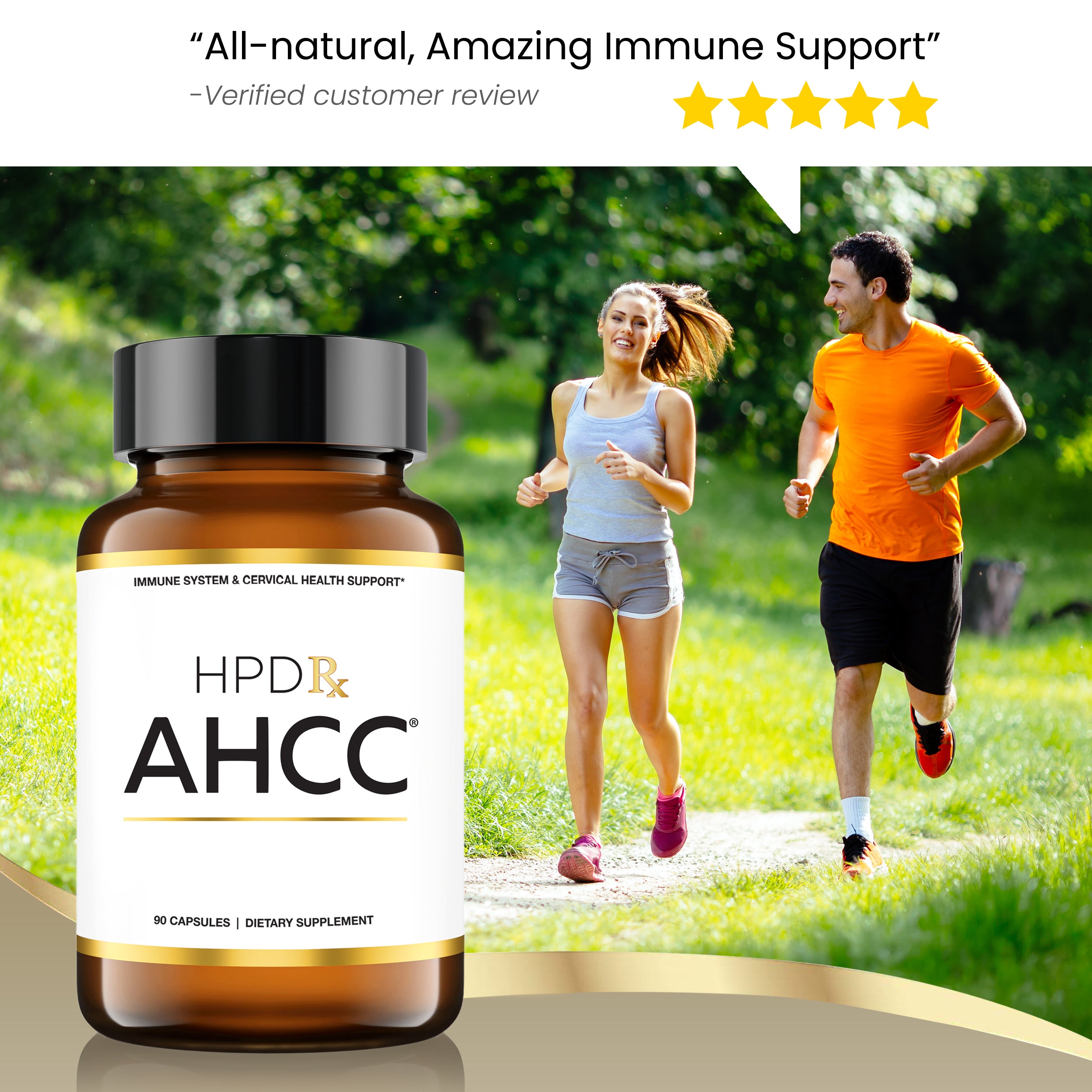
Each three-capsule serving of our HPD Rx AHCC® contains 550 mg of genuine AHCC® from shiitake mycelia plus 550 mg of organic shiitake fruiting-body extract. We recommend two servings daily.
We are not hiding everything under one vague “mushroom blend” number. You can see which part is genuine AHCC® and which part is the separate organic shiitake extract.
For women looking at supplements after an HPV result, we think that distinction is worth paying for. Dr. Monte Swarup, MD, FACOG, formulated our product around genuine AHCC® rather than a look-alike ingredient with a similar name.
Beta Glucan vs AHCC®: Which Should You Choose?
Choose based on the reason you are taking it.
If you want broad immune support, a properly standardized yeast or mushroom beta-glucan product can be a reasonable option with human research behind it.
If you want a specific standardized mushroom-derived ingredient with its own human immune research, AHCC® is easier to evaluate because the ingredient itself is defined.
And if persistent high-risk HPV is your main concern, AHCC® has the stronger case for an oral supplement because it has direct randomized human HPV data.
Final Takeaway
Beta glucan is a broad family of compounds whose structure changes with the source. AHCC® is one standardized shiitake-mycelia ingredient characterized by low-molecular-weight alpha glucans.
Both have human immune research.
For HPV, however, the most useful distinction is direct evidence: oral AHCC® has been studied in women with persistent high-risk HPV. Generic oral beta-glucan supplements have not shown equivalent clinical evidence.